Showing posts with label mindful living. Show all posts

Wednesday, September 10, 2025

Away from the Algorithm

A Google Logo


So I wanted to check something on this blog, but I am not at my home computer.  I didn't realize that the ease with which my typing "happy ethical human" in the search box would return the link to my blog is actually thanks to some algorithm that tracks what I search for and how often I search for a particular term and not because "happy ethical human" is an easily found term on the internet.  Indeed, it is not.  So, instead of a link to my blog, Google search (which was not even in AI mode when I hit the return key), just returned the following results (which I share out of interest for the thoughts now provoked).  

A "happy ethical human" is an individual whose subjective well-being and life satisfaction are enhanced by living an ethical life, which often involves pursuing meaningful activities, developing virtues, and acting with integrity. Research suggests a reciprocal relationship: ethical proclivities tend to increase happiness, and greater happiness can foster more positive ethical judgments and cooperative social behaviors. While happiness isn't a sole guarantee of a good life, and unethical behavior can lead to negative outcomes, modern positive psychology and traditional philosophy explore how the pursuit of a good and meaningful life often involves both happiness and ethical conduct.

The Reciprocal Relationship

Ethics -> Happiness:.

A key finding is that ethical behavior can increase happiness and well-being. Engaging in meaningful activities, developing virtues like honesty and compassion, and acting with purpose contribute to a richer, more fulfilling life.

Happiness -> Ethics:.

Conversely, a state of happiness can make individuals more ethical. People who are happy tend to be more social, cooperative, and more likely to make improved ethical judgments.

The Nature of "Ethical" and "Happy"

Ethical actions:.

This includes adhering to standards of right and wrong, practicing virtues like honesty and empathy, and recognizing the importance of the common good.

Happy living:.

Beyond fleeting pleasure, happiness is linked to concepts like human flourishing and subjective well-being. It involves living a life of meaning, engagement, and purpose.

Balancing Personal Happiness and Selfishness

A crucial distinction is made between genuine happiness and pure hedonism or selfishness.

Giving excessive attention to one's own happiness at the expense of others can be considered unethical.

The goal is to pursue happiness in a way that doesn't lead to self-centeredness but rather to a more flourishing and ethically engaged life.

Philosophical and Psychological Perspectives

Ancient Philosophy:.

Thinkers like Aristotle focused on achieving eudaimonia, a concept of human flourishing and living a good life through virtue, rather than just pleasure.

Modern Philosophy:.

While some modern views link happiness to subjective satisfaction, traditional ethics emphasizes an objective, common good that individuals strive for together.

Positive Psychology:.

This field studies human flourishing and well-being, exploring how happiness, meaning, and ethical behavior intertwine.

As it happens, I don't think this AI-generated comment on the juxtaposition of "happy" and "ethical" is too far off the mark.  While it doesn't emphasize the "human" part of the blog title, the ideas of community and reciprocity do point to our humanity.  One thing that I appreciate as a nuance to this LLM attempt to embrace ethics is the recognition of the problem of selfishness.  As humans, we have needs as well as desires, which can, from time to time, get in the way of ethical choices even without the distorting lenses of our perceptions and biases.

That being said, I think I like this definition:

A "happy ethical human" is an individual whose subjective well-being and life satisfaction are enhanced by living an ethical life, which often involves pursuing meaningful activities, developing virtues, and acting with integrity. 

 I can but try.

Sunday, August 27, 2023

25 Ethical Actions You Can Perform in the Privacy of Your Own Home

Ethical Culture is committed to Ethical Action.  Some folks call it Social Action.  Others stick with Social Justice.  There are differences between these labels, but all of them are pointed toward a central aspect of Felix Adler's "new religion":  That we seek to be better, more moral humans; that we can do so by acting more morally; that we will learn to do better with practice.  That, at least, is my interpretation of what I read in some of the addresses that Adler gave to the New York Society for Ethical Culture and other groups in the late nineteenth and early twentieth centuries.

In leading various Ethical Action committees (for the Ethical Society of Austin and the American Ethical Union), I have observed that many speak of--and practice--Ethical Action as a group activity conducted in the community.  I tend to think that it is how we live our lives--in our ordinary daily activities--that we also put our Ethics into practice, which makes those daily activities Ethical Actions.  

Ethical Society of Austin joins protestors at the Texas Capitol
(Adam Gravois makes an important point)

Here are some examples of Ethical Actions that we can practice in our daily lives.  Almost all of these actions are directed toward the environment--reduced use of resources and recycling of used resources.  Even so, some of these actions can also lead toward some social/community connection as well as involve our Ethical decision making in shopping, both of which will have an effect beyond our homes.  Indeed, all of these actions connect us to the planet and those who live on it, reminding us of the importance of even the smallest action.

Five in the kitchen:

  • (2) Rinse and recycle metal cans (after air drying).  Be sure to drain all liquid from beverage cans before placing them in your recycling bin.
    • This seems like an obvious thing to do, but I've seen wet cans tossed into the bins often enough to understand that not everyone is thinking about the future growth of mildew in the bin and in the recycled cans.  The time delay between the tossing of the can and the actual recycling process can be lengthy enough for all sorts of toxic items to grow, coat the bin(s), and escape into the air.
  • (3) Load your dishwasher carefully, being mindful of the physics of water flow to assure clean dishes.  Run the dishwasher only for a full load (top and bottom!).  Consider turning off the heat drying cycle and allowing your dishes to air dry.
    • My late husband and I had many discussions about the physics of water (it goes down and around, not up or through solid masses) and how that related to the dishwasher.  Now I cringe when I see dishes piled in such a way that water flow is blocked.  Not only is this dangerous (surfaces not cleaned and sanitized), but it is a waste of water and electricity when the machine can't do its job properly.
    • I allow my dishes to air dry when the washing cycle is finished.  This saves a bit of electricity (which makes me feel somewhat less guilty about relying on a machine to wash my dishes).
Five in the bathroom:
  • Turn off the water in your sink when you brush your teeth.
  • Consider purchasing toilet paper made from recycled paper.
    • Soft, fluffy toilet paper is made from fresh-cut trees which have longer and more flexible fibers.  Recycled paper can get the job done without the luxury of wiping with a soft, fluffy item which is sourced from a vital, slow-growing resource.  
    • Check the label on your toilet paper (or contact the manufacturer) to see whether it includes recycled paper and how much.  
    • I use Who Gives a Crap brand toilet paper.  This company uses post consumer waste to make its recycled toilet paper.  It also makes toilet paper from bamboo, a fast growing grass (no trees needed).  
  • (2) Recycle the wrapper and toilet roll core.
    • If the wrapper is plastic, it needs to go along with your other plastic bags for recycling.  If paper, just put it with the rest in your bin.
    • Yes, the cardboard core is recyclable.  (It's also good for crafting and, with a slit up the side, bundling messy computer wires.)
  • Consider saving your leftover soap pieces to make a "new" soap ball.
    • OK, I haven't made a soap ball yet, but I'm saving the soap slivers.  I will, no doubt, make a big deal out of shredding the slivers and making the ball--when the time comes.
Five in the living room:
  • Turn off unnecessary lights.  
  • Do you really need to run the TV in the background?
  • (3) Magazines can have longer lives after you've finished with them:
    • Check with a local senior facility to see if they can use the magazines for their residents.
    • If there are lots of pictures, check with a local school to see if teachers can use the magazines for projects (or for reading).
    • If all else fails, recycle the paper.
Five in the closet/laundry:
  • Wear your clothes longer.  
    • Purchase durable fabrics in "classic" styles that can be worn year after year.  This will help cut the cycle of "fast fashion" and, ultimately, reduce the amount of clothes thrown into a landfill.
    • Unless you are outside in the Texas summer and/or doing heavy manual labor, chances are you can wear that blouse/shirt more than once.  This will reduce the frequency of laundering your clothes and the expenditure of energy resources to do it.
  • Hang dry your clothes rather than using the dryer.  This will extend the life of the fabric (less loss of fiber) and wearability (less shrinkage).
    • Yes, things will be rumpled.  Straighten the cloth as much as possible while still wet.  Iron only if you really must.  Strut the rumpled look when among friends.  😏
  • Wash your clothes in cold water.
  • Wash only a full load of clothes.
    • Yeah, yeah, the manufacturer has settings for smaller loads, using less water.  It still uses electricity for a full cycle.  

78 degrees in the summer;
68 degrees in the winter.

Five for the whole house:
  • Set your thermostat on 78 for the summer, 68 for the winter--and don't touch it.
  • Switch to LED lightbulbs.
  • Turn off the light and the ceiling fan when you leave a room.
  • Use natural light as much as possible.
  • Change your A/C filters regularly.
Most of these things reflect a degree of "common sense" and promote frugality.  Who Gives a Crap Toilet paper is not frugal in terms of the cash that I pay to buy it, but, since I'm not flushing trees down the loo, I am happy to spend the money.  I'm not so good at using natural light when it is available, but assorted nurses have entered my home and started messing with the blinds often enough that I am catching on.  All of this "small stuff" takes some practice and attention to detail until it becomes a habit.  The tradeoff in cost/effort vs benefit may well be in our improved sense of commitment to the earth and our fellow earthlings (of all species) as we succeed in reducing unnecessary demands on the planet's resources and increase our progress toward being the kind of person that we wish to be.

Wednesday, September 14, 2016

If I had a hammer

I attended the American Ethical Union's Lay Leadership Summer School in North Carolina this past August. It was a "mountaintop" experience on several levels, not least because we were in the beautiful Blue Ridge Mountains, staying at a resort and learning center called The Mountain.  A part of the training that I and 19 other ethical humanists from across the country undertook included breaking out into teams to create "End of Day Ceremonies," part talent show, part creative rethinking of how we celebrate and mark transitions in our local societies.

My team included six people from congregations of differing sizes and disparate communities.  What we had in common, however, was music.  Not everyone saw themselves as "a singer," but everyone was game to try.  Not only were they willing to sing in public, they were willing to rewrite the lyrics of favorite songs to communicate ethical culture.  We presented our "ceremony" as a cabaret with much participation from the audience--singing along, dancing, general hooting and hollering.  It was, we thought, replicable for other societies:
  • select an occasion
  • set the (desired) scene
  • gather a few volunteers to start a song
  • project the new lyrics on a screen so the audience can sing along
  • enjoy
This is not the kind of performance that needs to be perfect or fancy or even all that good.  Exuberance can make up for a few flatted notes--assuming the audience ever sings softly enough for anyone to notice.  It was all about fun and the "joy of ethical."  We even called our cabaret "Felix's Joy Joint" and required a "secret password" to get in.  The password:  "Don't postpone joy!"

My own performance took a slightly different tack.  (Surprise, surprise!)  I knew what I wanted to sing.  Was thrilled that I would get to sing.  Loved every minute of it.  And what I sang was "If I Had a Hammer," pretty much in the style of Peter, Paul and Mary.

Why this old song?  Why not change the words to "be more ethical"?  Because of this:


Part of our "performance" was to tell our story.  How did we come to ethical culture, what does ethical culture mean to us, what about ethical culture keeps us coming back for more?  Each of us had different stories to tell.  My story, for that day, came from the deep distress that is calling me to action, ethical action, to make our world better, more humane, safer for human beings.

In 1970, the images in the video above were splashed across America.  Armed soldiers shot down American college students who were protesting the War in Vietnam.  They shot down protesters as well as random bystanders, including one fellow in a phone booth who was calling his mom to tell her that, no, he was not part of that protest and not to worry.  I, too, was on a college campus in 1970.  Not protesting.  Not too knowledgeable about much outside of my chosen field of study and the work that I needed to be doing to get my next degree.

Then I heard the news:  "They're killing college students."  I saw the images.  I realized that things were happening that could cost me my life, so I had better figure out what they were pretty damned quick.  So I joined the march.  And I manned the barricades with my sign.  And I helped keep the campus radio station going with my editorial skills.  And . . . I was changed.  (This is how you radicalize people, by the way.)

Years of various levels of activism and political involvement later, I was again asleep to the world around me.  My life was consumed with personal grief and recovery.  I could not watch or read the news--my own pain was too much for that.  I did, however, eventually find that famous Road to Recovery and read the news now and then.  I was, however, clueless on the morning of June 12.  June was Gay Pride Month.  I wore my Freedom Rings to our Sunday Meeting at Ethical Culture of Austin and made some bland announcement about "awareness" and "being a good ally."  It was only on the way home that I happened to turn on the radio.

Forty-nine dead.   And I was awakened.

What my waking eyes saw were things that had certainly been going on a long time--often out of my line of sight even before I lost family members and began the never-ending process of grieving.  LGBTQ.  Latinx.  Police violence.  Religious radicalism--of all sorts.  Hate and oppression and discrimination and dirty tricks and . . . it just doesn't end, does it?  But now I see it, as if anew, and am determined to try to make a difference.

So, in those beautiful mountains and that ramshackle "resort," in humidity that exceeds what Houston can do, in a welcoming room of ethical humanists, I told my story of two awakenings and how I felt that ethical humanists, joined in ethical action, could make a difference.  And I sang.  And we sang.


For me, this was a mountaintop experience because I got to sing out loud what I had been humming and softly singing to myself for weeks.  It was a mountaintop as well because I was heard--not merely as a chance to sing, which meant a lot to me--but as a voice, calling out those words:  Danger, Warning, Love.  And it was a mountaintop because I know that others share that sense of danger, are calling out warnings, and exclaiming that Justice, Freedom, and Love for each other are essential to our survival as a nation.

Wednesday, September 7, 2016

Seeing injustice is an ethical obligation

As ethical humanists, we talk about injustice and its many faces and the choices we have to correct it.  As humans, we bog down on priorities and strategies and "getting it."


In the past weeks, I have been much involved in these discussions--observing, listening, talking, and writing.  My correspondence has grown substantially, and now it is time to come back home to the Hoedown to work it out in my own mind, at my keyboard.  The weeks have been full.  St. Louis for the 101st AEU Assembly. The Mountain near Highlands, NC, for the AEU's 2016 Lay Leadership School. Family.  Adventures in travel.  Making connections with other ethical societies and with the roots of the movement.  Throughout all this busy-ness have run the threads of social justice--specifically racial justice, criminal justice, and the occasional stray mention of feminism/womanism.

Where do we start to act?  Why, indeed, must we act at all, especially when our own lives are not affected by these conflicts but rather by others, perhaps based on economics or age or some other damned thing?   Here's a thought:

As ethical humanists, we commit to making the world a better place so that in and by that process we make ourselves better humans.  We are, then, obliged to look at the world around us--our home, our neighborhood, our community, our country, our world--with eyes that appreciate what is good and just but also identify what is corrupt and unjust. 

The first step in fighting injustice, I would say, is first to see it.

We often wear blinders in our daily lives, protecting ourselves from pain, getting in ruts with our comfortable routines, not seeing the suffering of others unless we are slapped with one of those late night commercials about hunger or animal abuse.  I change the channel, so much do I resist feeling that pain. But there is injustice all around us, begging to be seen. 
  • Why does my neighbor keep having broken bones, falls, bruises, depression? 
  • What does this article I am reading about black people being shot by police mean for my community?  Does it happen here?  
  • If water scarcity and drought is a root cause of the violence in Syria, can such a thing happen here?  
  • I am doing a good thing by serving meals at the homeless shelter, but why are these people homeless?
Simply being aware of the signals that something might be wrong can be a start.  If we cannot see injustice, then we can do nothing to overcome it. Seeing the signals and recognizing them as signals, we can then begin learn more about it and the problems that are being signaled.

"Black Lives Matter"--tee shirt, button, statement--is a signal that something is wrong--not only in the black community but in the white community that surrounds it.  When someone cannot understand that signal, cannot see that it is communicating something important, that too is a signal of something wrong.  It becomes a problem ignored, a wrong unrighted.  Worse, it becomes a problem prolonged and increased.  

How do we see?

Well, we look.  We scan our environment for threats--this isn't safe, that could be hurtful.  We look for anomalies--something is out of place, not right. We look for balance--the fairness that may be the most fundamental of all human values. Maybe we should expand our search beyond ourselves and our families to others in our community/world, even including strangers in our protective vision?

We interpret what we see.  That's the part about "getting it."  We tend to interpret the signals around us in personal terms.  Personal would include ourselves, our family, our friends--and moving out beyond the circle of known persons to larger entities, still "circles" to which we "belong."  We use familiar words and concepts and experiences and knowledge to interpret the signals we get so that we can read them in terms that we understand.  Not everyone uses those words or shares those experiences.  Seeing injustice will sometimes include a new perspective on what we are looking at.  That new perspective may include active study of an issue to learn more or something as simple as listening so that we can see things better.

Here's a fairly mundane example.  It's about wallpaper, but "wallpaper" eventually became a code word with my late husband that stopped a budding conflict because one of us remembered what happened when we shopped for wallpaper for the bathroom.  Well, it was a matter of taste.  I wanted the foil with butterflies (this was in the 80's!) and he wanted the stripes.  Things got tense.  We were starting to get a little more heated and a little louder and realized that our "discussion" not going well in the wallpaper/paint store.  We decided to take it over to the McDonald's across the street and try to work it out with some ice cream. And so we did, finally reaching the dumbfounding realization that he was talking about the master bath and I was talking about the guest bathroom.   We were arguing over nothing, since I was fine with stripes in the master, and he was fine with butterflies for the guests. From then on, for more than thirty years, one of us could say "wallpaper," and the other would stop to make sure that we were actually talking about the same subject. 

The point of the wallpaper story is that interpretation of data, including signals about injustice, can depend upon point of view.  "Getting it" always includes knowing the point of view from which you are "seeing."  It usually includes recognizing that more than one point of view is looking at the problem.  It should include sharing points of view until everyone can really see the same thing.

Seeing injustice, I have said, is an ethical obligation.  I also think that it is an ethical action.

What are you seeing?

Monday, September 5, 2016

Labor Day is a day for ethical actions

Labor Day is that awkward holiday that ends summer and begins a season of month after month of national holidays.  It is also a day of significance for workers in the US:
Labor Day, the first Monday in September, is a creation of the labor movement and is dedicated to the social and economic achievements of American workers. It constitutes a yearly national tribute to the contributions workers have made to the strength, prosperity, and well-being of our country. (US Department of Labor)
As a national holiday, it was established by Congress in 1894, after the majority of states had already established holidays in honor of Labor.  In the anti-union (in, oh, so many ways) South, it is a good time for shopping the sales and alcohol-related highway deaths.

I've been thinking about labor and wages and such since coming back from the AEU's 101st Assembly in St. Louis.  While the Assembly program was focused on the theme of "Bending the Arc of History Toward Justice," there were resolutions on other matters that also got some attention in small briefing sessions and in the business meeting.  One was the Living Wage resolution.  It's worth a read.  And it's worth knowing that an earlier draft of the resolution focused on raising the minimum wage to $15.  After some discussion, the makers agreed to change the resolution to support a living wage--the amount of money that a person must earn to support their family if they are the sole provider.

Here is the current living wage estimate for Travis County.  Less than $15 for a single adult, but considerably more for adult + child, a family situation for many in Travis County.  Indeed, thirty-three per cent of children in Travis County live in single parent households.

Living Wage Calculation for Travis County, Texas
Hourly Wages1 Adult1 Adult 1 Child
Living Wage$10.72$22.64
Poverty Wage$5.00$7.00
Minimum Wage$7.25$7.25
10 more columns

Living Wage Calculation for Travis County, Texas

livingwage.mit.edu/counties/48453
Massachusetts Institute of Technology

A living wage is not all that matters to the workers in our community. Workplace safety.  Fair treatment.  Transportation.  Working hours/days.  I'm sure there's more.  We have a holiday right now, and I'm all for that, but I think there is more that needs to be done to see that workers at the lower end of the pay scale get a fair deal.  Still what can I do that would make any difference?

One thing I see a lot of is outright abuse of people working--for little money--in a service capacity.  Waitstaff.  Sales clerks/cashiers.  Others who help take care of our needs in public and in private.  The abuse comes when we think we have been ill-served.  Something is not perfect.  Service is too slow.   Whatever it is that triggers our (false) conviction that we have somehow been disrespected, mistreated, or otherwise taken down from our (assumed) royal throne.  I could just say, "Get over yourself," but as an ethical humanist I want to point out that we are bound to respect the inherent worth in all human beings. A mistake in service is just that--a mistake--not a catastrophic assault on our personal worth. Courteous, non-confrontational language ("Please take this bag as well," "I'd like more ice in tea, please" "I think there's an error in this receipt") can keep things flowing smoothly and acknowledge the worth of the person as well as the service. Instead of abusing those who help us, we reduce at least one source of stress in their workplace and respect their humanity.

I have also seen--just about all of my life--the chinchy, cheap tactic of under-tipping.  We can argue that the "owners" of whatever service is being provided should pay better wages.  I'm not sure how that would work out with portage services in transportation centers, but I know it would raise the price of meals in most restaurants.  Lower prices come from low wages.  We eat fine meals while the servers can't even afford a place to live.  We work in offices cleaned by people who are homeless.  Am I kidding?  Austin Resource Center for the Homeless provides day and overnight beds for workers in our downtown businesses.  They are simply not paid enough to live close enough to their jobs to be able to work there.  (I mentioned transportation, didn't I?)  Look at the etiquette of tipping and then consider how tips are considered, in reality, not merely an indication of quality of service but as a necessary part of the worker's pay--in lieu of actual wages.  Got poor service?  Say so--nicely.  Ask for any corrections you think necessary, including sharing with management that some additional training is needed.  Don't stiff the worker when circumstances are beyond his/her control.  Remember that the time given to your care is a part of their workday for which they need to be paid.  Then think about your part of their living wage.

What I'm writing about is not a big deal.  This is really a very small part of our labor force and a small part of their lives.  We can advocate for better policies that give workers--all of us--better lives, better conditions, better incomes.  Nothing here argues against that--and much more can be argued in favor of it--but small things have big consequences.  A little courtesy can go a long way toward encouraging someone who is working in difficult circumstances.  A proper tip can help make a struggling family a little more secure.  You will be making a small effort, but you will still be engaging in ethical action.  Try it. You'll like it.  (And share this with your sister-in-law.)

Wednesday, July 6, 2016

Civil Disobedience and Social Change

BreakFree2016 is a global movement to keep fossil fuels in the ground.  The group organized protest actions worldwide in May.  Five of these actions were planned for the US.  Over a two week period there were 30 "escalated" actions, involving 30,000 people on 6 continents.

While I had already posted the Disobedience video on the Ethical Society of Austin website so that members could participate in these actions as a digital witness, we watched it together during our Sunday meeting on July 3.  A day before the nation would be celebrating its 240th year of independence, we had an opportunity to revisit social movements of the past through this movie.  We were well aware of July 4 and its meaning.  Indeed we decorated a little with flags and some star-spangled centerpieces for our tables.  But, when we joined hands and sang "We Shall Overcome" with Pete Seeger, we were all in the mode of thinking about how far we had come in 240 years.


Not far enough.

The video provoked discussion of its focus--fossil fuels and the need to keep them in the ground--but also the broader issue of how to bring about social change on the many issues that confront us as a nation, indeed as a planet.  Some took the view that protests of the sort planned by Break Free were not effective, were actually futile; rather the route to social change, they thought, is through education and one-on-one conversations.  Others echoed the images of the film itself--the struggle of migrant workers, the civil rights movement, the non-violent but highly effective actions of Mohandas Ghandi--and brought more social change issues to the dialogue--Mothers Against Drunk Driving, anti-slavery and suffragist movements, all of which involved civil disobedience when dialogue had failed to bring the desired change.

We could all agree that change is hard to see close up.  Many of us also agreed that we may not be able to effect great changes on our own nor even live to see the changes we hope to bring about.  Still we asserted that we can take action in our own lives, making the small changes that are part of the cumulatively greater changes that are needed.  

In his 1876 founding address, Felix Adler issued a clarion call:
The world is dark around us and the prospect seems deepening in gloom, and yet there is light ahead. On the volume of the past in starry characters it is written—the starry legend greets us shining through the misty vistas of the future—that the great and noble shall not perish from among the sons of men, that the truth will triumph in the end, and that even the humblest of her servants may in this become the instrument of unending good. We are aiding in laying the foundations of a mighty edifice, whose completion shall not be seen in our day, no, nor in centuries upon centuries after us. But happy are we, indeed, if we can contribute even the least towards so high a consummation. The time calls for action. Up, then, and let us do our part faithfully and well. And oh, friends, our children’s children will hold our memories dearer for the work which we begin this hour.
Adler was speaking of the founding of ethical culture, yes, but ethical culture was founded for the deeds yet to be undertaken by its members, disregarding creed and working not only to build the literal edifice of the Meeting House but the moral edifice of ethical humanism on a global scale.  Working, to be sure, in the practical everyday world of need and suffering and petty human failures while seeking a better way to treat each other with respect and compassion.  We are a long way from the high goals set at the beginning of our community, but we have the encouragement of our past to buttress our efforts while the future pulls us forward along our path.  Indeed, Adler thought of that, too, when nearly 50 years after giving his founding address, he spoke to English ethical humanists about meeting the challenges still being posed to the moral commitment of ethical culture:
The radiant future stretches forth its arms toward us, and binds us to be willing servants to its work, willingly to accept those limitations of the individual will which are indispensable in the service of a far­off cause, a service which at the same time disciplines and ennobles the individual himself. 
Social change is a struggle.  It demands that we take the long view, that we accept incremental progress as steps on the long path ahead of us.  It also demands commitment to that long path and even some degree of sacrifice, if self-discipline is indeed a sacrifice.

Whether or not civil disobedience is the answer to causing change, it will likely remain one of the options for many.  For ourselves, today, we may consider what the long-term goal is and what actions we can personally take to work toward that goal.  If the goal is to keep fossil fuels in the ground, what can we do to make that happen?

  • Educate ourselves about the presence of fossil fuels in our daily lives.
  • Reduce our own consumption of fossil fuels.
  • Educate and encourage others to do the same.
  • Seek ways to influence decisions about fossil fuel extraction (advocacy, public education, divestiture).
  • Act up?
What else?

Wednesday, May 25, 2016

Spelling God With Two O's

That's the name of a slender book of essays, written by Arthur Dobrin, who first began having colloquies as a form of meeting for ethical societies.  How helpful to have found a free download of the book.  I found it on one of my meandering wanders through the internet that had one purpose but ended up some place else. In this case, the "landing" was a serendipitous encounter with something I will probably make a morning ritual.  OK, I don't actually have a morning ritual, but I want one, and it could become much more interesting than what's going on right now.

Dobrin's book is a collection of essays on values and essential concepts.  He names the value, provides an inspirational quote from another writer or thinker (including but certainly not limited to Felix Adler), and then explores the idea from several perspectives.  For example, tolerance:
Since we all have our preferences and savor life in different ways and are certain that our ways are natural and right, it is impossible to like or to approve of everyone and everything they do. Still it is possible be tolerant of them. You may never want to meet them but you grant them the right to live as they choose. You don’t envy them and may dislike them but you allow them to live as they want. Not every way is worthy of appreciation but everyone has the right to bad taste.
Dobrin notes that not everything should be tolerated--deliberately causing pain, harming innocents, etc.--but that tolerance is a (minor) virtue that makes living in a diverse society better for all of us.

I think I will be reading this book as soon as I can get it onto one of my reading devices.  If I fail with the morning routine thing (pretty much a given), I can at least read one of these brief essays whenever I find myself waiting or dining alone or just needing to spend a little time working on my life.

Wednesday, May 18, 2016

Black Lives Matter . . . to Me

That's the inaugural "Compassionate Pen Writing Prompt" for the New York Society for Ethical Culture's Ethics for Teen Leaders "invitation to express."  Teens are asked to use that writing prompt to express what the Black Lives Matter movement or concept means in their own lives.  The expression may be an essay, a poem, a short personal letter, a short story, or a graphic.

Audrey Kindred, children's program director at NYSEC, explains the invitation in these terms:
"Black Lives Matter"  is a modern civil rights call of a kind, over half a century after Dr. King's "I Have a Dream" speech.  This call at this time indicates that we might need to be ever more attentive of unmet needs, caring of continued inequalities and vigilant about outstanding harms occurring within the very "American Dream" Americans have been creating since King.  
Her words caught my attention, especially:  unmet needs, continued inequalities, outstanding harms.  And then I found this music.


The album came from the fortuitous meetings of Rev. Osagyefo Uhuru Sekou and Jay-Marie Hill at Black Lives Matter protest in Cleveland.  Once they decided to collaborate musically, they wrote 11 songs in 6 days.  This is both "movement music" and "healing music" that deals with issues of equality for gender, sexuality, and race.  It also raises unmet needs, continued inequalities, and outstanding harms.

Worth a listen.  Worth a thought--what is there in our everyday lives that contributes to unmet needs, continued inequalities, and outstanding harms? How should we address these issues in our everyday lives?

Wednesday, May 11, 2016

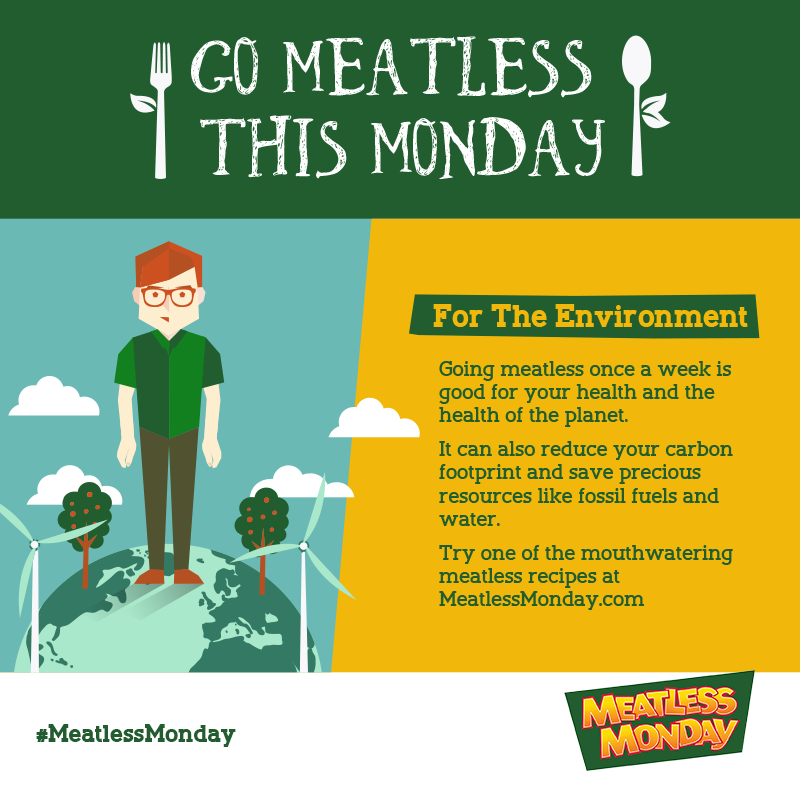
The Ethics of Eating: Meatless Monday

I'm a Texas girl (senior variety).  I love cow.  Well, not the ones on four feet, unless they are at some distance from my person.  I have been up close and personal with one or two (milking is much harder than it looks; also gross). When the cow becomes a steak, I, as I said, love cow.  Chicken fried.  Medium rare. Even the poorer cuts become wonderful with some fajita seasoning or slow cooked with a little bbq sauce and a goodly amount of smoke.  Hamburgers? Yum.  Meatloaf?  That's a happy meal for some of us. (Me! Me!)

I do come by this love naturally.  Texas, as I said.  My father was also an influence.  During World War II, there was a foxhole moment I dare not even imagine when he swore:  "If I get out of this alive, I'm eating steak every day." He pretty much did, and so I also developed a taste for it.  In his case, the vow came from the semi-starvation of some grueling and, well, I can't even bear to think about it.  I just know that he wanted cow at most every meal, and he ate his dessert first.  That, too, was combat-related.  If any shooting started, the one part of whatever pitiful meal was available that you did not want to miss, he said, was dessert.

I will never be a vegetarian, but lately I've been trying to reduce my consumption of meat.  This for environmental and health reasons.  The damage to the planet of raising large food animals is said to be out of hand, but it's also said to be mitigable with improved practices.  We Americans have been said to eat more protein than any other nation, to the detriment of our health, but there is clinical evidence that says otherwise.  Meh.  Every health and environmental concern that has been raised has always faced push back from interested parties.  That's not all bad when methods and data need some stricter attention nor when practices improve and change the scope of the problem.  In the meantime, however, those of us trying to figure out what the right thing to do (or eat) might be are left trying to sift through the mixture of messages to find the truth--or a reasonable facsimile thereof.  For me, that truth says I can reduce my meat consumption by making Mondays meatless.


Doing so is easier said than done.  So far, I'm at only 50% compliance.  I have been trying to observe Meatless Mondays for the past six weeks (more, if you count the times I forgot to start).  In that time, I've nearly starved, spent a fortune, and struck out by accident when I woke up and grabbed some leftovers to stop the hunger pain in my stomach.  Oops!  Wrong leftovers for Meatless Monday. Yesterday, I had to eat a hamburger, knew that I was about to lose another chance to observe Meatless Monday, and decided that I would just have to try to deal with it on Tuesday.  (So far so good.)


Even so, I am committed.  I think it's a good idea for my personal health to start making an effort to get more plant-based food in my diet.  Just as important, I think it's an ethical choice on many levels to decrease the amount of meat in my diet.  The reasons include, among other things that I care about, antibiotic resistance, animal welfare, animal waste, land use, water pollution, and more. Keeping the commitment after a lifetime of loving a really good steak is going to be a challenge.  Here's what I'm thinking:

  • Choice takes advance planning.  I can't wait until Monday to try to figure out what I can eat.  I need to buy the foods that I will eat well in advance. Prepare the snacks, even some "leftovers," for quick bites when I need something to nibble on or just something fast to tide me over until the next meal.  (Try not to think about the madness of hunger to a diabetic.  We just try to survive it.)
  • Choice needs to be sustainable.  I can't keep buying prepared and packaged foods at this rate.  My food budget tells me so, and I know that home cooked meals are better for me.  I can manage the carbohydrate and sodium content for my body's needs much better than any corporation.  So I need to know that Mondays need extra time for food prep, giving, I suppose, an added benefit of slowing down the all too hectic pace of my life lately.
  • No meat does not mean no protein.  I can't sustain my health by turning Mondays into a day for all starch-based foods (although I did do that one Monday).  I need to learn more about alternate sources of protein.  The spirit of Meatless Mondays precludes fish, but not (so far) eggs and dairy.  I should broaden my palate and learn to cook with tofu and other vegetable proteins.
  • Making an ethical choice helps eliminate the perception of deprivation.  That's a personal thing.  At first, I just tried to make it through 24 hours without meat.  I even watched the clock and made a ham sammich at midnight, so deprived did I feel.  Now, despite my frequent failures at observing the day, I am more unhappy, dissatisfied when I do fail, because I think that this is an important and valuable activity for me.  What I am discovering is that--even as I struggle to overcome years of habit and the memories of my mama's excellent chicken fried steak--I want to do this.  I want to reduce my impact on the planet, however minute the reduction, with this choice.  I also want the satisfaction of making an ethical decision to do what feels like the right thing.  That means that I don't feel so deprived by this choice any more and don't have to rush for some meat at midnight.

Meatless Monday is not a choice that everyone can--or will want to--make.  It's a personal decision that I am trying to make work and slowly getting better at. Still, how and what we eat can have an effect on the planet, on our community, on our fellow humans.  Whether we all make the same choices is less important than that we do make a considered choice--that we are mindful of how we live--because it matters. The choices we make are, after all, ethical choices regardless of which way we decide an issue, because they are choices that balance our values and beliefs against each other and reflect our ethics in the balance.

Your thoughts?


Wednesday, May 4, 2016

The Ethics of Driving*

OK, maybe this should be revealed up front as a recitation of some of my pet peeves, but, really, people, enough is enough.  I've been doing a lot of driving lately.  Trips back and forth to see the great grandbaby.  Hauling a dear friend's relatives around when she can't be in two places at once.  The occasional road trip to visit a friend.  Those weekly drives north of the river to attend ESOA meetings.  I thought I had seen some really nasty driving habits in Houston, but Central Texas seems to be picking up some bad behaviors of its own.

There was a time in Texas when we saw many reminders to "Drive Friendly."  Texas is, after all, advertised as "The Friendly State," so it fit very well with our supposed character to have that motto painted on various highway signs.  As I recall, it did seem to do its job as a reminder to drivers to drive courteously and lend a hand when needed.  Then we got the motto "Don't Mess With Texas."  Despite what folks outside of Texas might think, that was really an anti-litter campaign.  As in don't mess up the house, kids.  The motto replaced "Drive Friendly" on signs and, despite all intentions, morphed into some macho crapdoodle that was used far too often to mean "leave this big bad dude alone"--or some such nonsense. Nothing to do with driving anyway.

Nowadays, I'm starting to see some of those electronic signs that tell us about missing children or elders also tell us to "Share the road."  It's about time!

I rant.  Perhaps to step back a little and think about what sharing the road might mean.  Perhaps even to think in terms of the ethics of driving.  What might one do to make driving a social event--that is, an event for members of a civil society--rather than a venue for rage, reckless endangerment, death?

  • Here's a simple one.  Use those headlights judiciously.  Not so hard.  Turn them on when driving at night, in the rain or other conditions where visibility is limited, or all day long--just to be helpful to other drivers who also happen to hold your life in their hands.  Dim them unless you are way the hell out in West Texas and nobody else** is on the road!  Bright lights inside the city limits or outside the city limits can be deadly.  Blind the oncoming driver, and you become responsible for the consequences, whether the injury is to him or to you.  That's how I see it anyway.  If I could see at all with your bleeping bright lights in my eyes.  You may think that the headlights are there for your sole use and benefit--but, no.  They are indeed intended to help you see the road, but they are also intended to help others see you so they can try not to hit you.  
  • Another no brainer.  Use the turn signal like it means something.  Once upon a time, cars didn't come with built in turn signals.  You had to stick your arm out the window (if there was a window) and hold it straight out to signal that you were turning left or bend it at the elbow and point your hand to the sky if you were turning right.  Cars also lacked brake lights, so you needed to stick your arm out that window again and hold it straight out at a midpoint between your shoulder and your hip.  That let the folks behind you know that you were slowing down.  If you wanted to be creative, you could waggle it up and down a little just to make sure they didn't miss the signal. Lots of folks did miss those hand signals, of course; hence the need for signal lights (and tail lights).  Even so, way too many drivers nowadays seem to forget both the existence of turn signals in their vehicle and the basic need to let other drivers know their intentions.  I'm supposed to know when you want to change lanes just because your SUV is bigger than my car and you think that allows you to move it over into my lane without a signal?  Sorry, honey, all I can tell from that maneuver is that you grew up in a barn and probably have more money than sense.  As an (evolving) ethical driver, I want to help you get to where you are going--safely--just let me know when you are going to make a move into the space where my car is headed so that I can slow down to let you in rather than having to slam on my brakes, watch my belongings crash into the floorboard, and feel the bruising effect of a locked seat belt.  Use that turn signal, already!  When making a turn.  When changing lanes.  Whether on a public road or in a parking lot or other private area.  It's plain common sense, its courtesy, and, if you care, it's ethical.  In turn, I will respect the signal, not only knowing what you plan to do now that you have shown me, but allowing you to do it by giving you room to get into my lane or waiting for you to make your turn.  Even in a parking lot.
  • But here's the real thing about sharing the road:  You have to do it anyway. Unless it's your private road and no one else is driving or walking or cycling on it--you don't have a choice.  You have to share the space.  At high speeds. Trying to control a heavy machine that can become a deadly weapon at any second.  Why drive as if there were no one else on the road when there are clearly dozens of other vehicles all around you?  Why drive as if those vehicles did not include other human beings whose needs and wants are just as important as yours?  You're late?  Join the club.  You want to get home soon?  Club.  You forgot that you had to stop at the store so you need to make a sudden left turn?  Signal, for garden seed.
Sure I sound grumpy here, but this is not a wish for the "good old days."  It's all an opening for me to say that this is an area where I think that ethics does have a role to play.  Above and beyond the legal requirements for safe driving, I'm thinking that we might recognize that, even though we have just gotten into our car--alone--and will have no face-to-face interaction with others while we are driving, we are still about to interact with other people.  Driving--how we drive--is an ethical activity.  Ethical in that we make choices as we drive; we affect others positively or negatively by those choices; we affect ourselves as caring, compassionate (or not) human beings by those choices.  We may be the only person in our car, no one we know may see us, but we ourselves know the choices we make.   If we are going to try to bring out the best in others, maybe we could give a thought to how we treat them on the road. 

Your thoughts? 
--------------
*Hat tip to Adam Gravois for making me more conscious of this as an issue. 
**Why, yes, I do think that is an important point.

Wednesday, April 27, 2016

How We Live our Lives

In my new role as chair of the Ethical Action Committee for the Ethical Society of Austin, I had to give a report for this month's semi-annual membership meeting.  The last such meeting was only the second or third ESOA meeting that I had attended, and I learned a lot about the society.  I really wanted my report to be just as informative and meaningful so that anyone who might be in the same situation I was last year (interested but cautious) would get some reassurance from my report.  Plus I was excited to have bunches of stuff to report.

You can go to the ESOA website to see how I break down Ethical Action into categories, so I won't repeat that here.  I did want to think a little bit more about the section on Living as ethical action in that report.  I threw in some stuff that I thought maybe folks might not have really thought about:  co-location with Workers Defense Project (we rent meeting space from them), the weekly discussions of ethical dilemmas in our lives, and the big question of how we live our lives.

I counted the latter as ethical action because we all, more or less, subscribe, more or less, to the Eight Commitments of Ethical Culture.  By doing so we make ethics central to our lives and actions and we actively seek to improve ourselves, our communities, our world.  Sometimes that is as small an "action" as treating someone we interact with so that we bring out their best.  Each time we choose to act ethically, we have performed an ethical action.  A simple concept, but I felt it was worth mentioning lest we think of Ethical Action as something that can only be done at the organizational level.  Very often it's just personal.

This point has been brought home to me today.  As I've been catching up on some news and generally procrastinating on some actual work that needs to be done (a serious talent of mine--wish someone would pay me to procrastinate--I am really good at it), I ran across an article about the boycott of Target being undertaken by a half a million people.

Hey!  I boycott Target.  Have been since 2010.  The CEO donated Target money to support an anti-gay gubernatorial candidate (in Minnesota).  I have gay family members.  I have married gay family members.  I was really angry to see that kind of money being used to promote inequality.  So I quit shopping at Target. As I recall,  Target later repudiated this fellow's action and distanced the company from the whole thing.  But I was pissed. So I never went back to Target.  It wasn't as hard as giving up Hobby Lobby anyway (yes, I boycott them, too).

Now it seems others have jumped on my bandwagon (not that I ever mentioned it to many people).  When I followed the headline, I discovered that I should have paid more attention.  The people boycotting Target are all upset because the company has adopted a policy that allows people to pee in the restroom that fits their gender identity.  Target is standing up to the wave of hate and discrimination that seems to be sweeping across our country in this electoral season of madness with a nationwide policy that says that transgender people can at least feel safe from that kind of stress while dealing with a basic human function.

Well, I guess my boycott is over.  All is forgiven, Target.  Well, not forgiven. That was a dumb "business decision" way back in 2010.  Still, I need to stop looking at that red target sign as a symbol of discrimination and now read it as a symbol of inclusion and rationality and, well, courage.  My perspective has changed, and my actions will now follow.

We make choices.  How we treat people is an ethical choice.  How we spend our money is another one.  It's also personal.  I didn't shop at Target for personal--and ethical--reasons.  I do shop at Walmart--for personal and ethical reasons.  Not everyone would agree with my decision to shop at Walmart, but I am content in the knowledge that a beloved family member has a stable job in a supportive (yes!) environment that matches her skills and abilities.  It's important to me to be able to "support" this family member in a positive way just as it was important for me to be able to "support" my gay cousin and his husband by not spending money with a company that I perceived as contributing to a hostile environment for their lives.

Now I need to learn the lesson about not holding a grudge.

And go shopping.


Monday, April 18, 2016

Shop for the basket and other updates

Just a few updates for the changes that are slowly occurring with ESOA and life in general:

  • I made a more or less big deal about "shopping for the basket" to provide donations for the Capital Area Food Bank.  Our old basket was getting pretty broken down.  Finally, duct tape just wouldn't do the job.  Thanks to our decisive president, Rebecca Fisher, we now have a new basket.  This one is green (various shades of which will now be our official color for ESOA stuff) and folds up nicely for storage. John Thiess, our treasurer, is also the dedicated volunteer who takes our donations to the Food Bank and keeps a tally of our donations.  The good news, from my perspective, is that we now have a more or less permanent place for the basket--under the Ethical Action display table.  You no longer have to look around and wonder where the yellow basket is, nor do you have to climb over chairs and people to get to it.  When you walk in the door now, you may be looking for coffee, but the basket will be right in front of you.  With a sign even.  Subtle, huh?
  • And speaking of the Ethical Action display table, we have one.  We are making every effort to park the thing right in your way and even entice you with sweet treats to grab your coffee and come over and hang out.  
    • This is where you can make your donations to the Capital Area Food Bank--canned goods and ink cartridges in the basket, money in the Feed Me canister.  Test your skills at putting a whole meal in the canister without spilling it!
    • While you're there you can sign up for a shift at the Austin Resource Center for the Homeless.  This is a once-a-month opportunity to help make a difference by serving dinner at the shelter.
    • The EA table is the place to find updated lists of opportunities for issue education and cultural events that seem likely to appeal to ethical humanists.  (Thanks to John Thiess for his weekly activity list.)  
    • Advocacy training and briefing materials will also be placed on the table.  This is where you can look for more information about the issues that we are talking about and resources on how to address them. There will usually be something different there for you to look at each week, so come on by!
  • In other Ethical Action news, we are updating our page on the ESOA website.  As ethical humanists we act through giving, serving, advocating, and living.  While I try to explore some of these actions on this blog, at ESOA we are really doing the stuff I'm thinking about.  How cool is that? Very.  Check out the Ethical Action page to see what we have done, what we have planned, and--soon--more of those resources on issues and actions to take.  
  • Also, too, very big news (big for me anyway--learning new skills here).  We now have an Ethical Action Calendar.  This may change to become a calendar with all ESOA events on it, but, for now, this is where you can look for service events, advocacy events, and the educational and cultural events that may inspire you as an ethical humanist.  Does anyone know how to sync this with my smart phone?  clueless
  • Finally (well, probably), we have managed to complete our transition to waste free potlucks.  Some months ago, we decided to try to eliminate disposable eating and serving ware from our monthly potluck dinners.  We started with the napkins--moving from paper to cloth.  Then we accumulated some donated flatware.  Dishes we had to haul in from home each month, but we've just had a generous donation of those as well (thanks, John).  We seem to be set to enjoy our monthly dining and fellowship from now on knowing that, with a little extra effort, we have reduced consumption of products destined for the landfill or even the recycling bin. A little elbow grease, some soap and water, and, of course, some composting.  
  • Finally (really this time), Trish Taylor has moved but she hasn't forgotten us.  Trish continues to serve ESOA as its webmaster--and now she's blogging about her move and this new chapter of her life.  Join her at Tea Pad Tales.  Lovely walks, lovely photography, lovely spirit.
This makes me a happy human.  :)  What should we do next?

Tuesday, March 29, 2016

Recycling your reads

One major influence that my late mother had on my life was to develop my interest in reading.  When I was a young child, she, herself being an avid reader, took me to the bookmobile.  She was handicapped, so climbing the steps of the bus was a serious and painful effort.  She solved the problem of the squirming little one by setting her next to a bottom shelf full of books with pictures.  When we finally got a neighborhood library, our summers were wonderful, with weekly trips to that marvelous building of light and . . . books.  In those days, an adult patron could check out twelve books, a child six.  Mama traded with me, getting six and letting me have twelve!

One other influence from my mother came when I heard her say:  "I'd rather have a roomful of books than walls filled with art."  Some might think that that was a negative influence, but what's done is done.  I freaking love books.  Not just to read.  I love to touch them, hold them, see how they are made.  I love to look at them.  Take me to a party and park me next to the bookcase. I'm good for hours. I can read tables of contents and indices with great contentment.  My dream home will have wall to wall bookcases and a nice comfy chair.  Oh, and lots and lots of books.

In reality, I have too many books.  I didn't think that would ever be possible, but I just can't store all that I have.  A hoard of books, packed away, is not the same as a library of books with all of them accessible for reading and, OK, admiring. Gotta let go of some.  No doubt you do, too.


I'm thinking it's a good thing to keep books out of landfills.  Also good to make them available to others who have less access, either because of money or of mobility/transportation issues.  Before we think about turning our books into trash or even about Recycling them, let's think about ways to work with the other R's in the environment:  Reduce and Reuse.  The obvious places to let go of our treasured books are Half Price Books and Goodwill.  But these options involve getting a poor return on the original investment or, in the case of Goodwill, not everyone's favorite place to donate.

There are other options to consider.

  • Schools.  Talk to the teachers you know and see if they need books for their classroom or their school's library.  Not all books will be appropriate there, but a few might just find the perfect place to inspire our community's future. Once you have an idea about what is needed, consider holding a book drive in your neighborhood.
  • Senior facilities.  Senior residential facilities often have a library or reading room.  My experience is that the books there need constant replenishing.  As it happens, ESOA has a link to one such residential complex, Wildflower Terrace, so this might be an easy to send your treasures on to a new life.* There are surely other such facilities near you.  Adopt one.  Talk to the management about what is needed, and consider holding a book drive in your neighborhood.
  • Recycled Reads.  This program of the Austin Public Library takes donations of used books.  The donated books then may be sold to the public: $2 for hardbacks, $1 for paperbacks.  Proceeds benefit Austin Public Libraries.
  • Buy used.  If the book you want is popular enough or old enough, there may be used copies available from a variety of sources:  Half Price Books, eBay, Amazon, Goodwill, etc.  Before you buy a new book, think about whether it's likely to be something that you will want to keep in your library or get rid of after one reading.  Maybe used will do just as well?  While this option doesn't get royalties to authors and it doesn't reduce the actual number of books in print, it is a strategy for reducing your own personal contribution to the landfill.  It extends the life of the book itself when you buy used, moreso when you pass it on when you are through with it.
  • Download.  A variety of reading options are available for you if you just download a book instead of buying the print version.  You can read books on your computer, cell phone, or dedicated reader.  You can buy them new at a (somewhat) reduced price and, in the case of your cell phone, carry them around in your pocket for as long as you want.  You can even get free books, if you're into classics and out-of-copyright works, from several sources, but especially from Project Gutenberg, which makes them available in a variety of formats to accommodate just about any type of reading device.  Search for author Felix Adler and see what comes up.  
  • Read 'em again.  If a book is worth keeping, it should be worth re-reading. Take some time to reconsider your personal library holdings.  What have you not yet read?  What have you read and forgotten?  What have you read and really want to read again?  Hate to let go of that book?  Read it again!
Do you know of other places where we can donate used books?  Do you have a favorite place to buy used books?  What other ways might we reduce our consumption of printed books or reuse the ones we have?

--------
*Hat tip to Bob Warren for modeling this ethical action.

Monday, March 7, 2016

Windy weather

As Central Texas approaches summer (any day now, I expect), we are getting all of the spring things taken care of as quickly as possible.  Wildflowers are in bloom.  Trees are budding.  Birds are building nests.  A little rain (although the predictions suggest a fairly dry summer).  A lot of sunshine (and the predictions suggest a warmer-than-average summer).  Glorious blue skies, which, of course, we can see in any season, but who wants to go outside in the summer?

Last night we had some wind.  Not much.  Maybe up to 12 mph?  We were supposed to have some rain, but, again, not much.  I could see some wet pavement this morning, but it was mostly drying off.

The wind blew over my new sun shelter.  I never expected the thing to last the summer, but we only just put it up a couple of days ago, and I was looking forward to having the mosquito free work space to continue sorting through the rubble of my life.  (OK, "rubble" is dramatic, but I'm in a flippant mood about said "rubble," so I'll let it stand.)  I was rather disappointed that the shelter didn't even last a week.  I guess I'll have to figure out something about tie downs and such if I'm ever going to get it back up.

In other news, I had a massive amount of recycling this week (rubble!).  Filled two large bins and borrowed another.  Getting that third bin meant hiking over to a neighbor's house, dragging the already-half-filled bin back to mine, filling it, and then dragging the fully loaded bin back to the neighbor's house.  Up an incline.  Well, it took a while, and, although the morning was pleasantly cool, I got rather warm.  I paused on the way back to my home to rest a moment and felt a lovely cooling breeze ruffle my hair.

Isn't wind a wonder?  We can harness it for power, transportation, recreation. We can manufacture it for cooling as well as the more practical uses.  We fight against its destructive powers, when too much wind can wipe out cities and kill.

The science of wind can be a little dry to some of us, but the wonder is available to all of us.  We might take a moment now and then to notice the wind and its effects on our lives--for good or ill--perhaps to acknowledge that so many things that we encounter in our lives may also affect us for good or ill, being neither good nor bad but just what they are.    Or perhaps we can take that moment to enjoy the simple pleasure of a cooling breeze.   Would that be spiritual?

Monday, February 29, 2016

Shop for the basket

The Ethical Society of Austin has several ethical action programs, one of which is an ongoing campaign to promote cash and in-kind donations to the Capital Area Food Bank of Texas.  This food bank is tasked with supplementing the food needs of residents of not just Travis County but also the Counties of Bastrop, Bell, Blanco, Burnet, Caldwell, Coryell, Falls, Fayette, Freestone, Gillespie, Hays, Lampasas, Lee, Limestone, Llano, McLennan, Milam, Mills, San Saba, and Williamson.  

The need is great.  The work is important.  Our part in this effort is small.  It is, however, essential, and ESOA is committed to doing its part.  Each week members are reminded to bring their donations for the food bank and place them in the yellow basket.  

Donations include:
  • non-perishable foods;
  • empty ink cartridges;
  • cash or check.
Sometimes we forget to bring items for the basket.  In my case, I am trying to reduce the size of my pantry (long story), so I am trying not to "stock up" on things as I used to.  That has made it a challenge to find something in the pantry for which I don't already have specific meal plans at the moment when I am ready to leave for our Sunday meeting and just then remembering that I should bring a can for the basket.  My strategy to deal with this is:
  • Make a personal commitment to support this program.  That is, I am accepting that this is an important part of ESOA's ethical action in the community.  Therefore, I want to be an active participant in making our action successful.  That means finding food or money for that yellow basket!
  • Shop for the basket.  That is, when I go to the grocery store now, I have a list of what to buy, and I more or less follow it for my own food needs.  While I am shopping, I also look at items that I think might be good for a family that needs some extra help in the pantry.  I toss in 2 to 4 cans so that I can bring them for the yellow basket.
  • Make it easy on myself to get the food to the basket.  That is, I bag the food for the basket separately and, if the weather is looking reasonable, leave the bag in the car.  That way, the bag comes with me when I go to our Sunday meeting.  Otherwise, I bring the bag inside my home and have it near the door so that I can (hopefully) remember it when I go to our meeting.
This may sound a little hokey, but there are lots of food drives around.  We are asked to place a bag of groceries near our mail box now and then.  We are asked to donate a little extra at the cash register at our grocery store.  Some stores have barrels for you to place canned goods.  Some have prepackaged bags for the food bank.  Indeed, we have so many opportunities to give that we can tune out the message.  And our lives are busy enough that it is also a challenge to remember every single week to bring that can.

So this week, see if my strategy will work for you.   If it does, then next Sunday we'll see you with something in your hand and you can put it in the yellow basket.  If all else fails--Capital Area Food Bank of Texas can turn your dollar into four meals.  We'll even take your quarters!

Every week.  Nutrition is an ongoing need, which is why it is so important that our support is also ongoing.